
The Future We’re Fighting For
Why competing everywhere — even in deep red states — is how we strengthen democracy

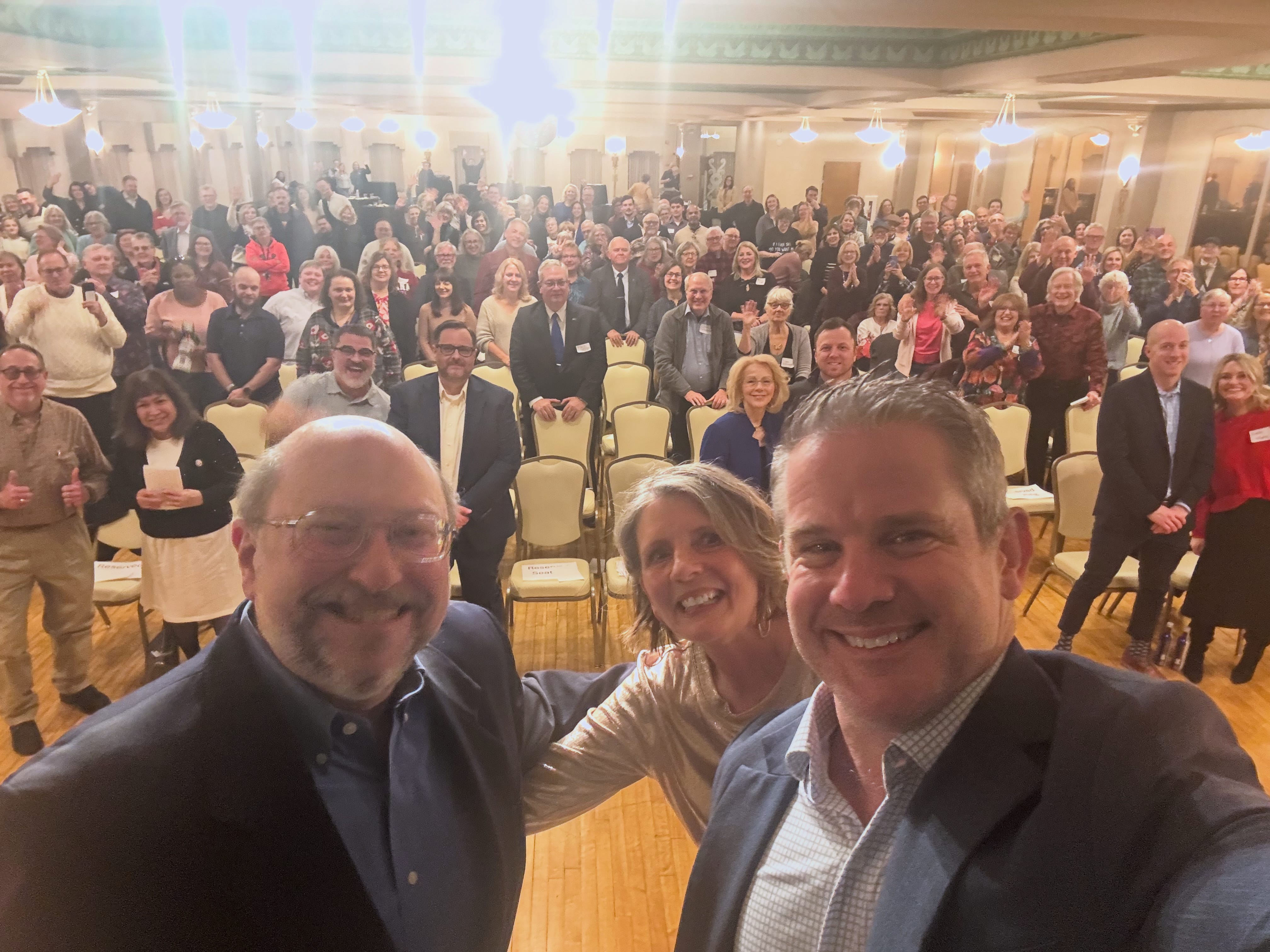
Last night I spoke to the Indiana Democrats in Anderson, Indiana. And I’ve got to tell you — it fired me up.
Hundreds of people showed up. In a state that most of the country writes off as deep red. In a place that cable news barely mentions unless it’s election night. They came anyway. They came on a weeknight. They came ready to talk substance. And the conversation wasn’t shallow. It was thoughtful. It was tough. It was hopeful.We spend so much time focused on what’s broken in politics — and a lot is broken — that we forget to talk about what’s still working. What’s still alive. What’s still worth fighting for.
In Indiana right now, there are serious candidates running for state house and Congress. Not placeholders. Not protest candidates. Real, qualified, credible people. And in many of these races, they’re competing in primaries because there’s more than one good option. That’s what a healthy political movement looks like. That’s a party of ideas. That’s debate. That’s democracy doing what it’s supposed to do.
And here’s the thing: fighting for Democratic candidates in a state that’s assumed to be deep red isn’t symbolic. It’s essential.
If you abandon states because they look unwinnable, you abandon millions of Americans. You abandon school boards. You abandon state legislatures. You abandon the bench of future governors, senators, and presidents. You also abandon the moral argument. Democracy isn’t preserved by concentrating power in a few blue islands. It’s preserved by competing everywhere.
When we fight in red states, we’re not just trying to flip a seat. We’re defending the idea that every voter deserves a choice. That no one gets to rule by default. That ideas have to be tested in the open marketplace, not protected by gerrymaps and apathy.
The Founders expected disagreement. They built a system around it. James Madison wrote that faction is “sown in the nature of man.” He didn’t say eliminate factions — he said structure them. Force them to argue it out within institutions. Make them persuade.
John Adams warned that liberty can’t survive without knowledge among the people. That requires engagement. It requires citizens who show up — even in places where their party isn’t dominant — because they believe the Republic is bigger than party advantage.
Somewhere along the line, we started treating politics like permanent war. If you lose, the system is rigged. If you disagree, the other side is evil. If compromise happens, someone must have sold out.
That’s not the country we inherited.
The Constitution itself is a negotiated document. It’s messy on purpose. It forces argument. It forces coalition-building. It forces you to talk to people who don’t see the world the way you do. That friction is not a flaw — it’s the design.
And that’s why what’s happening in places like Indiana matters so much.
When Democrats step up to run serious campaigns in red states, they’re not just trying to win power. They’re strengthening the democratic fabric. They’re telling voters, “You matter. Your voice matters. You deserve an option.” They’re forcing debates about education, public safety, taxes, healthcare, freedom — in communities that deserve to have those debates.
That’s how you take back democracy. Not with one viral moment. Not with one presidential cycle. But by competing everywhere. By building from the ground up. By refusing to surrender entire states to one-party rule. And this year? They just may win some “unwinnable” races.
I looked out at that crowd in Anderson and saw something you don’t see on cable news: steadiness. Determination. People who are tired of chaos but not tired of America. People who believe we can argue hard and still believe in the system.
I think about my son Christian a lot in moments like that. He didn’t choose this political era. None of our kids did. But we do get to choose what we leave them.
We can leave them a country that retreated into safe corners — blue states over here, red states over there — slowly calcifying into hardened camps. Or we can leave them a country where ideas compete everywhere. Where no state is written off. Where losing an election doesn’t mean democracy failed, and winning one doesn’t mean you get to dominate unchecked.
The Founders pledged their lives, their fortunes, and their sacred honor to launch this experiment. We’re not being asked to do that. We’re being asked to show up. To run. To vote. To defend the rules even when they don’t favor us. To argue passionately but accept outcomes peacefully.
That’s not naïve optimism. That’s civic maturity.
Last night in Anderson reminded me that the American experiment isn’t hanging by a thread. It’s being worked on — quietly, steadily — by people who still believe in it. People willing to fight for candidates even in states that are supposed to be “gone.” People who understand that democracy isn’t something you protect only where it’s easy.
We are fighting for the long game. For a culture of ideas over idols. For negotiated solutions over zero-sum warfare. For a country strong enough to handle disagreement without breaking.
And if we keep doing that — if we compete everywhere and refuse to cede ground — we will leave our kids, and Christian, a nation stronger than the one we inherited.
That’s the future I’m fighting for. How about you?
Thank you Adam! This is an excellent post! Loved it! Got my spirits up that’s for sure! Keep these coming!
This is exactly right.
Democracy isn’t preserved by concentrating power in safe blue islands. It’s preserved by competing everywhere…because the alternative is one-party rule, and one-party rule is how democracies collapse.
When you abandon states because they look unwinnable, you’re not just conceding electoral votes. You’re abandoning the architecture that makes democratic correction possible. You’re surrendering school boards, state legislatures, judicial benches, and the entire pipeline of future leaders. You’re telling millions of Americans their voices don’t matter because they live in the wrong zip code.
But here’s the deeper point: societies that optimize for human flourishing don’t write off entire populations because engaging them is inconvenient. They compete everywhere because that’s how you build trust, distribute power, and create the conditions where people can actually live well rather than merely survive under unchecked authority.
The Founders understood this. Madison didn’t say eliminate disagreement, he said structure it.
Force ideas to compete in the open marketplace. Make power justify itself through persuasion, not domination. That friction isn’t a bug. It’s the entire design.
Competing everywhere isn’t optimism. It’s the only mechanism that’s ever worked to reduce suffering at scale…by distributing power so broadly that concentrated atrocity becomes harder, by creating accountability mechanisms in every jurisdiction, by ensuring that when systems fail there’s still a path to correction.
That’s not the long game. That’s the only game that matters.